Why Quiznos failed: the fast food franchise model that turned owners against the company

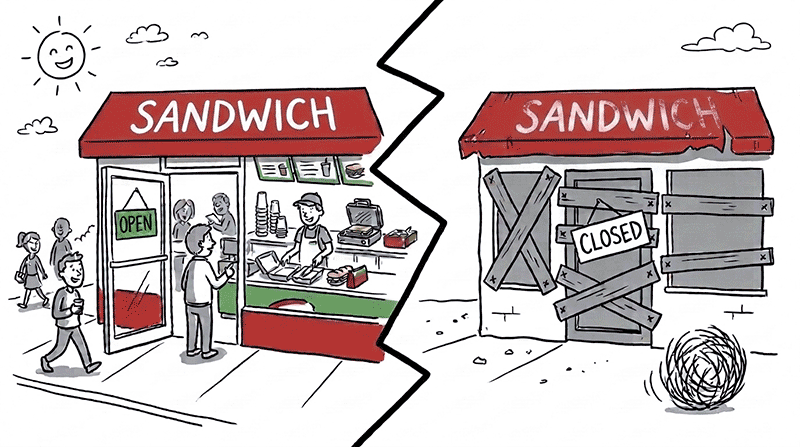
In 2007, Quiznos had more than 5,000 locations and was fighting Subway head-on. Less than 20 years later, only a sliver of that empire is left.
The toasted-sub chain didn’t lose to a better sandwich or a viral scandal. Its own franchisees said it was bleeding them dry, and in court they accused the company of hiding the money trail.
So how does a chain with 5,000 stores end up with a few hundred or fewer? It comes down to who was actually making money.
The rise: the little sub shop that toasted its bread
Quiznos started in Denver in 1981. Jimmy Lambatos founded it around a simple idea: toast the sandwich. That warm, crispy sub stood out in a world of cold cuts on soft bread.
In 1991, father-and-son franchisees Richard and Rick Schaden bought the company from Lambatos and took it public in 1994. The Schaden family took it private again in June 2001.
Then growth went into overdrive. By 2007, there were more than 5,000 Quiznos franchise locations. The brand even picked fights with Subway directly, and in 2006 it launched an aggressive ad campaign aimed straight at its bigger rival.
It looked like a franchise success story. The numbers hid a problem.
The turning point: a franchisor that profited from the supplies
Most fast food franchisors earn their money from royalties, a slice of each store’s sales. When the store does well, the company does well. Everyone wants the same thing.
Quiznos allegedly changed that equation. Franchisee lawsuits claimed the company shifted its business model in 2000, when it formed a distributor called AFD and began requiring franchisees to buy their food and paper through it.
The accusation was that the markup was the real business. The suits claimed AFD negotiated prices with suppliers, then resold the goods at a markup that was never revealed to store owners.
Here’s why that matters. If the company earns money every time you buy a case of meat, it doesn’t matter much whether your store turns a profit. It matters that you keep buying, and that new owners keep signing up.
According to the complaint, the numbers were striking. Quiznos’ EBITDA grew from $6 million in 2000 to $100 million in 2007. Those are allegations from the franchisees’ lawsuits, and Quiznos’ lawyers disputed various claims in the litigation.
The downfall: a chain reaction
The pressure built from several directions at once.
Franchisees fight back
Franchisees alleged that Quiznos required them to buy from the company or its affiliates, then inflated prices well above what comparable suppliers would charge, while collecting significant rebates.
A wave of class-action lawsuits followed. A federal court in Illinois preliminarily approved a roughly $100 million settlement resolving four class actions. Reports at the time said the case covered about 6,900 franchisees.
The settlement also forced changes. Quiznos agreed to an annual third-party audit of what it charged franchisees for mandatory products compared with prices elsewhere, and to rework its franchise disclosure document to clarify the role of company-owned entities in the supply chain.
The lawsuits kept coming anyway. One franchisee group’s suit alleged the chain had created pass-through companies to hide the markups, and said hidden profits reached more than $100 million a year by the mid-2000s. Again, those are allegations.
The stores start closing
Meanwhile, the market was shifting. Subway started toasting its subs, which erased Quiznos’ signature advantage, and the Great Recession led to numerous closures.
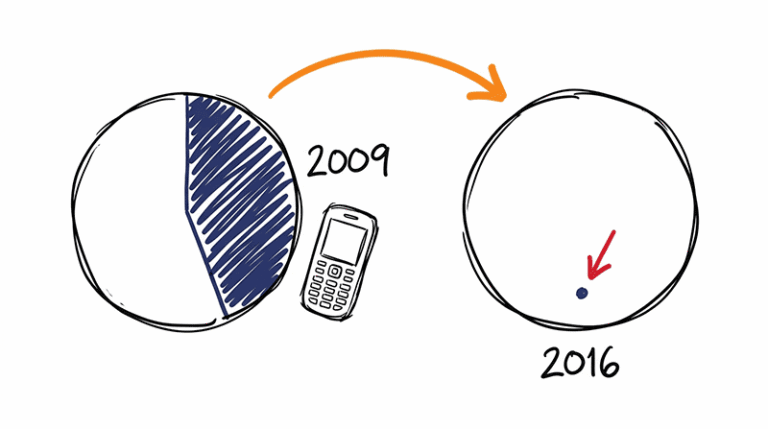
The decline was steep. At the start of 2009, the chain had 4,378 locations. By early 2014, it was down to roughly 2,100 worldwide, including about 1,400 in the U.S.
Debt and bankruptcy
The company was also carrying heavy debt. It reached an out-of-court restructuring in 2012 that cut its debt by more than a third, then reportedly missed a loan payment at the end of 2013.
In March 2014, Quiznos’ holding company, its main operating company, and a number of affiliates filed for Chapter 11 bankruptcy protection. Some subsidiaries, and the franchisee-owned restaurants, were not part of the filing. Reports at the time cited declining sales, about $570 million in debt, and poor relations with franchisees.
Even the fixes didn’t bring the chain back. Quiznos tried a fast-casual concept in 2015 and remodeled stores with drive-thrus and expanded menus, but never recovered.
Where Quiznos stands now
Today, the footprint is a fraction of what it was. As of October 15, 2026, ScrapeHero’s tracker counted 125 Quiznos restaurants in the United States, down from roughly 4,700 U.S. locations at the 2007 peak. Subway, by comparison, still has over 36,000 restaurants.
Quiznos vs. Subway: why the franchise model matters
Both chains sold sandwiches, but they were in very different positions by the end. Subway kept growing into the biggest sub chain in the world. Quiznos shrank to a footnote.
The gap wasn’t only about the food. A franchise system works when owners can make real money, because happy, profitable owners open more stores and recruit friends. A franchise system breaks when owners feel the deck is stacked against them, because they stop expanding, stop trusting, and eventually stop paying.
Key business takeaways
1. Watch where the company makes its money. If a franchisor profits mainly from selling you supplies, its incentives may not match yours. Ask how the parent earns revenue before you sign.
2. Hidden margins eventually come out. Allegedly concealed markups ended up in court, in headlines, and in a settlement. Transparency is cheaper than litigation.
3. Fast growth can hide a broken model. Thousands of stores looked like proof of success. But store count measures how many people signed up, not how many are profitable.
4. A franchise is only as healthy as its owners. When the people running the stores are squeezed, the whole system weakens, and no ad campaign fixes that.
5. Read the franchise disclosure document. If you’re ever tempted to buy a franchise, the supply chain section is worth reading line by line. It’s where this kind of conflict can hide.
The bottom line
Quiznos shows what can happen when a franchisor and its franchisees stop being on the same team. The sandwiches were fine. The model, according to the people running the stores, was built to feed the parent first.
For anyone studying fast food restaurant bankruptcies or weighing a franchise investment, it’s still one of the clearest warnings out there.
Did you ever eat at a Quiznos back in its heyday? And if you were thinking about buying a franchise, would a story like this make you look harder at the fine print? Let us know in the comments.
© Nathan T, 2026. California, USA